Showing posts with label Castle. Show all posts

Sunday, October 22, 2017

Château de Tronjoly, Cléder, Brittany

Wandering Around Cottage - October 2017 edition


I haven't written a lot lately, but I'm not forgetting my readers or my blog, I've just been over busy with work. Not that I'm complaining. I'm quite happy with my pupils this year, but the latin classes take me an awfully long time to prepare.

Je n'ai pas beaucoup écrit ces derniers temps. Ce n'est pas que j'oublie mes lecteurs ou mon blog, mais la préparation des cours de latin est très chronophage. Je ne me plains pas, mes élèves sont volontaires cette année et c'est agréable.

 
Therefore the amount of beautifying I've done to Cottage since my last post is framing one side of the upstairs doors with architraves... There are four doors, so eight sides... only seven to go! We're nearly there ;)

 Mais, par conséquent, les progrès de la rénovation de Cottage se limitent, depuis mon dernier article, à la pose de baguettes d'entourage de porte sur un seul côté d'une seule porte de l'étage... Il y a quatre portes, donc huit côtés, allez, plus que sept, j'y suis presque !

I didn't think one side of yet unpainted architrave would make you drool on your keyboard, so I decided to take you with me to a really dreamy place, the castle of Tronjoly, which is located in a small village on the Northern coast of Brittany.

Je me suis bien dit que des moulures même pas encore peintes n'allaient pas vous enthousiasmer... Du coup, je vous emmène dans un endroit beaucoup plus joli : le château de Tronjoly, situé non loin de la côte nord de la Bretagne.


The building of this castle began in 1534, but as with all castles (and homes) it was transformed with each generation living there. The main building has all its windows facing south as it was usual then (Cottage is also built that way, though it has a lot less windows). Weirdly enough, the east building was built first, then the main "manoir" and finally the west building was added.  The south side (which the windows overlook) is enclosed with a "patio" on which a chapel is built.


La construction du château a commencé en 1534, même si comme toujours, il a ensuite été modifié par les gens qui y vivaient. Le bâtiment principal est tourné vers le sud, ce qui était habituel (Cottage est construit de la même façon, avec beaucoup moins de fenêtres tout de même). Mais c'est apparemment l'aile est qui a été construite en premier. L'aile ouest a été rajoutée par la suite. Le côté sud (sur lequel donne toutes les fenêtres si vous suivez) est fermé par une terrasse sur laquelle se situe une chapelle. 


This "patio" is the only area opened to the public. This castle is still inhabited and the day I stopped by, there was a man (Knight Tronjoly?) sunbathing in front of the main building. For privacy reasons, I tried not to have him appear on the pictures.

La terrasse est le seul endroit d'où l'on peut voir ce château qui est une propriété privée. Il y avait d'ailleurs un homme (Chevalier Tronjoly ?) en train de bronzer dans la cour. Pour protéger l'intimité de ce grand chevalier, j'ai essayé de ne pas le faire apparaître sur les photos.


During the French revolution, the family living there was, of course, royalist. Their son went first into exile and then was part of the royalist army coming back to France to fight. He was one of those who arrived in France at Carnac, Brittany. The following days, many people were killed or captured. This is a pretty famous part of the history of Brittany is really bloody. But by some miracle, their son escaped safe and sound. I couldn't find o the Internet how he managed to do that. 


Pendant la Révolution française, la famille se range, oh surprise, du côté des royalistes. Leur fils part même de France pour revenir avec l'expédition royaliste qui débarque à Carnac. Ce passage assez célèbre de l'histoire bretonne est sanglant à souhait. De très nombreux royalistes sont tués, faits prisonniers ou exécutés. Mais, par miracle, le fils des propriétaires de Tronjoly s'en sort. Je n'ai pas réussi à trouver de quelle manière.


Now, you know, the castle world is a very small world, because while reading about Tronjoly, I found out that a century before the castle you can see on my pictures, there was an other, older castle that was the property of Jean de Kergoët and Jeanne de Kergournadeac'h. Doesn't that last name seem familiar? Yes, I showed you her home, the castle of Kergournadeac'h, last month. If you missed that post, you can find it here.


Savez-vous que le monde des châteaux est en fait tout petit ? En effet, quand je faisais mes petites recherches sur Tronjoly, j'ai découvert qu'avant les bâtiments que vous pouvez voir sur mes photos, il y avait un autre château plus ancien. Il était la propriété de Jean de Kergoët et de Jeanne de Kergournadeac'h. Ce nom imprononçable vous rappelle peut-être quelque chose... Je vous ai montré le château de cette famille le mois précédent. Si vous avez manqué cet article, vous pouvez le retrouver ici.


See you next time,

A la prochaine fois,

Hasta la proxima,


PS : If you're a reader from California, I hope  you, yours and your home are safe.

Friday, September 22, 2017

Château de Kergournadeac'h, Brittany, France

Wandering Around Cottage - September 2017 Edition


I've been away from my blog and my computer altogether a little longer than I expected. September didn't have a mellow beginning! Anyway, I'm back, but I have to warn you, due to a little eye problem, there will be no proof reading of this post... Please guess the words that are weirdly typed...

Je suis restée loin du blog et de l'ordinateur en général un peu plus longtemps que ce que je pensais. Septembre a commencé sur les chapeaux de roue. Enfin, me voilà de retour... Je dois vous prévenir, cependant, que pour économiser mon œil droit qui connaît un petit problème, je ne relirai pas cet article... A vous de deviner les mots qui sont mal tapés !


Let's get away from all our personal problems: I'm taking you away to Cleder, a charming coastal town of Brittany where there is an impressive number of castles and manors. Today, we're discovering the Castle of Kergournadeac'h (I'm sorry if you spit your coffee on the screen trying to pronounce it - I should have warned you before hand not to).
Eloignons-nous des problèmes du quotidien :  je vous emmène à Cléder, une petite ville sur la côte Nord de la Bretagne, découvrir le château de Kergournadeac'h. Désolée, vous venez de cracher votre café sur l'écran en essayant de prononcer ce nom ? J'aurai dû vous avertir avant qu'il ne fallait pas.


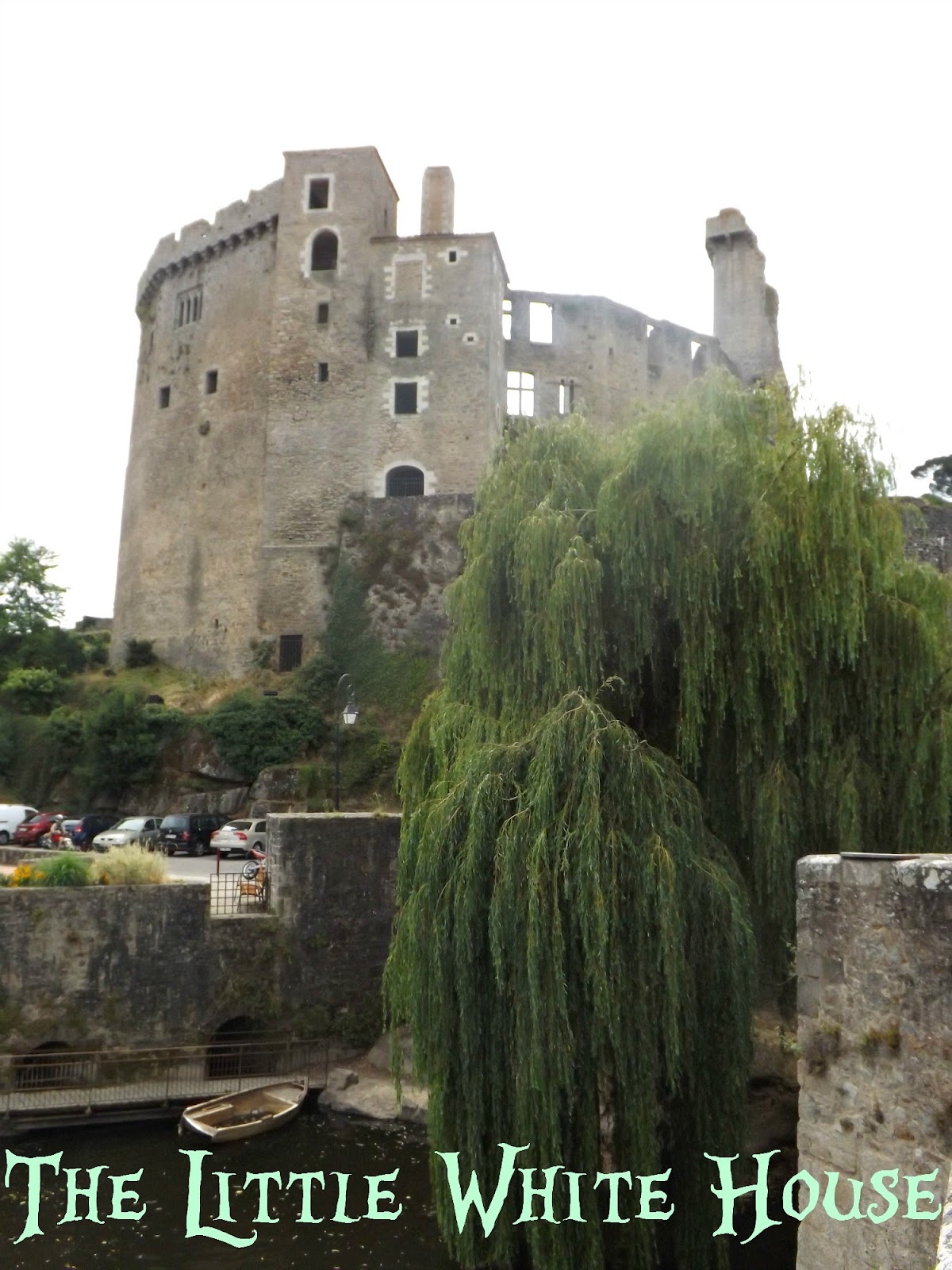
This castle can't actually be visited for two very good reasons: it's in ruins, so there isn't one floor left and it's on private grounds, so it's forbidden to come in, but I thought there were pretty nice views from the road... Once I had driven for what seemed a very long time on very narrow country roads to find it. And the "new" house of the land owners isn't too shabby to look at!


Ce château ne peut pas réellement se visiter pour deux bonnes raisons. Il est en ruine et il n'y a plus un seul plancher. De plus, il est situé sur un terrain privé et il est donc interdit d'entrer. Mais j'ai trouvé qu'on avait un bon aperçu depuis la route... Le dénicher au détour d'une forêt m'a quand même demandé de conduire longtemps sur de toutes petites routes de campagne en priant chaque seconde qu'un tracteur n'arrive pas en face ! 


From what I read "Kergournadeac'h" means "home to the man who doesn't flee" because it's said this land was given to knight Nuz as a gift because he helped Saint Pol to fight the dragon that was terrorizing people on the nearby Island of Batz, island you can see a glimpse of on this older post.


D'après ce que j'ai lu, "Kergournadeac'h" signifie "lieu de l'homme qui ne fuit pas" car ce territoire avait été donné en cadeau au chevalier Nuz en remerciement de l'aide qu'il avait apportée à Saint Pol pour combattre le dragon qui terrorisait les habitants de l'île de Batz, non loin de là, île que vous pouvez apercevoir dans ce précédent article.


If we don't know how much truth there is in the above legend, it seems there has been a castle there at least since the 13th century. The castle we can see today is the result of several transformations as often. It was finished in 1620 by his then owner who had worked quite some time to get the castle to look like he wanted. Sadly, he died only nine years later.

Si on ne sait évidemment pas à quel point la légende ci-dessus repose sur une base de vérité, il semble bien qu'il y ait eu un château en ce lieu depuis au moins le XIIIe siècle. Les bâtiments que l'on peut voir aujourd'hui sont, comme souvent, le résultat de multiples transformations. Ils furent achevés en 1620 par le propriétaire d'alors qui avait beaucoup fait modifier le château. Malheureusement, il mourut seulement neuf ans plus tard.


Why is the castle in such a state today? Sure, time has passed... But time was "helped". In 1760, the lady of the castle set it to fire, hoping her son would join the French royal court if he didn't have a home in Brittany anymore... I did see this story at least twice on the Internet, but some other sites don't mention it, so I'm not really sure it's true... But I find it interesting.

Pourquoi le château est-il dans cet état ? Bien sûr, le temps a fait son oeuvre. Mais il semble qu'il ait été bien aidé... En 1760, la propriétaire du château y met le feu, espérant priver son fils de son confort et le pousser ainsi à la cour de France. Si j'ai trouvé cette histoire au moins deux fois sur Internet, elle n'est pas non plus sur tous les sites et je ne suis donc pas sûre qu'elle soit authentique, mais je la trouve intéressante.


Since this date, the castle was mostly used as a stone supermarket for buildings like houses or chapels all around. Now, just in case you were planning to visit the place in order to get a stone or two for you own garden walls (not that the idea ever crossed my mind), let me tell you the building is now protected as a "historical monument"... I guess it means I need to keep finding stones in the field behind Cottage...

Depuis cette date, le château a surtout été utilisé comme carrière de pierres pour construire des maisons ou des chapelles aux alentours. Pour le cas où vous soyez déjà en train de planifier votre visite pour piquer quelques pierres pour le mur de votre jardin (non pas que cette idée m'ait traversé l'esprit), laissez-moi vous annoncer que le bâtiment est maintenant classé... Je crois que je vais donc continuer de déterrer des pierres dans le champ derrière Cottage...


Would you fancy having such a beautiful ruin in your garden?

Cela ne vous plairait-il pas d'avoir de si belles ruines dans votre jardin ?


See you next time,

A la prochaine fois,

Hasta la proxima,


PS : I still remember that I have at least one reader living in Florida and I hope she's safe after the hurricane. I love checking the map on blogger that shows me where all my readers are from... So many natural disasters happened lately around the world and I hope all of you are safe.


Wednesday, February 22, 2017

The Surprise

Wandering Around Cottage - February 2017 Edition - Part 2


If you've read the first part of this post, you've visited a Medieval castle that was overlooking a little town with red tile roofs and square-shaped buildings. I had asked you where you thought it was... And you were a bit lost, as I knew you would be... Some of them guessed it was not far from Cottage, but were confused because the architecture looks nothing like Brittany.


Si vous avez lu la première partie de cet article, vous avez visité avec moi un château médiéval surplombant une ville toute de bâtiments aux formes carrées et aux toits de tuiles rouges. Je vous avais caché le nom de cette ville et vous avez eu l'air bien perdu... Cela ne ressemblait certes pas à la Bretagne. Etais-je en Italie ? Si loin de Cottage ?


Brittany is known for its long shaped stone buildings and its blue slate roofs. So, what happened here?

La Bretagne est en effet plutôt connue pour ses bâtiments en pierre, à la forme allongée (les fameuses "longères") et aux toits d'ardoises bleues. 


The village's name is Clisson and it's located just a little South of Nantes, the town that used to be capital of Brittany, but now weirdly isn't officially in Brittany anymore. On the map below, you have in blue the area of the historical Brittany. The part in dark blue is nowadays Brittany.


Il s'agit du village de Clisson, situé à quelques kilomètres au sud de Nantes, cette ville qui a été autrefois capitale de la Bretagne historique, même si aujourd'hui elle n'appartient plus à la Bretagne administrative.


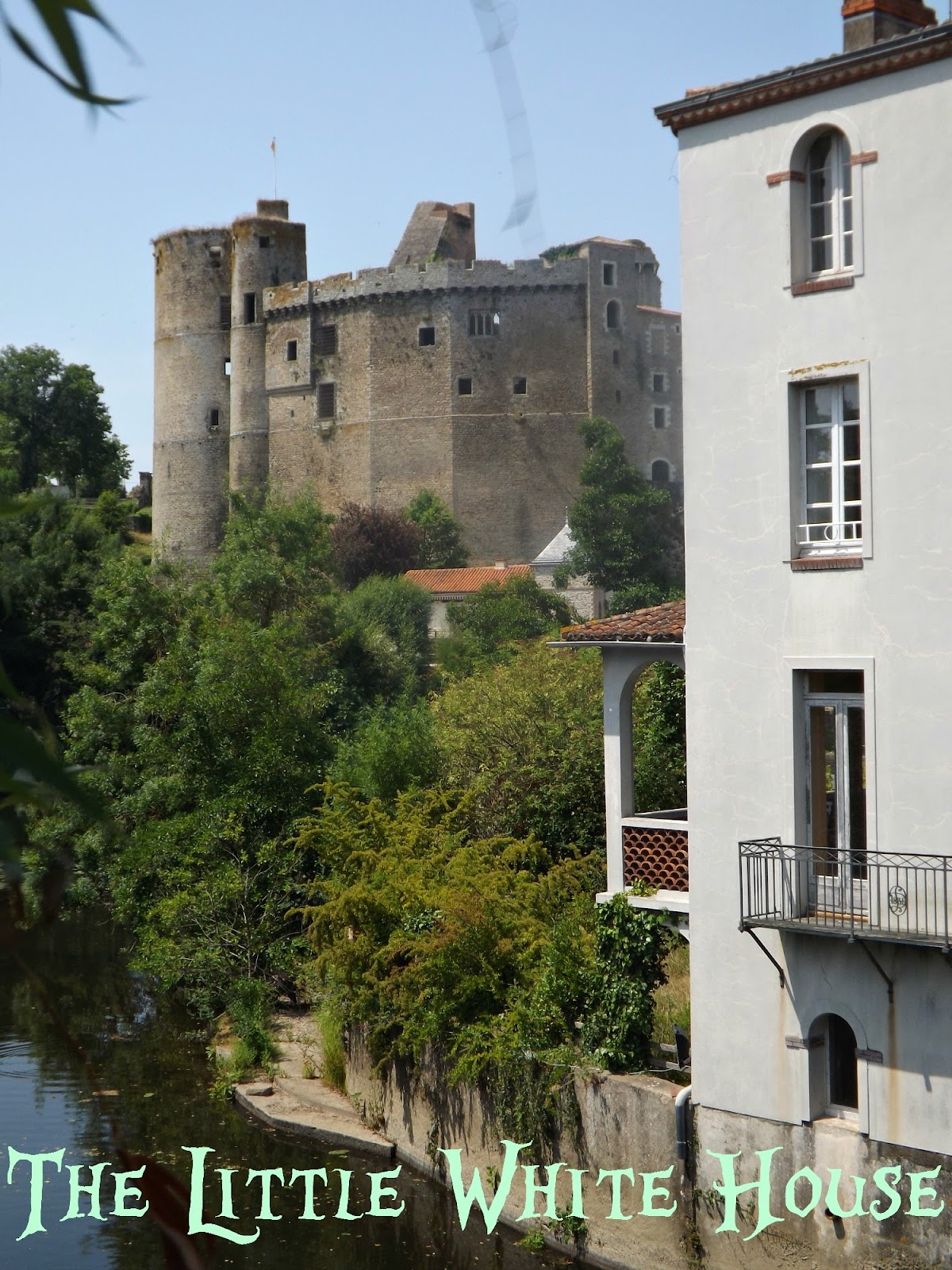
It used to be a traditionnal Breton village with small stone houses, a very  Breton church and an old Medieval castle you can visit here. It was built along a river called Sèvre nantaise, which was a blessing for me as it was very hot the day I visited and the river brought some much needed cool air.


Clisson a d'abord été un village breton tout ce qu'il y a de plus normal avec ses petites maisons en pierre, son église probablement bien typique et son vieux château médiéval que vous avez visité ici. Le village avait été construit le long de la rivière nommée la Sèvre nantaise, ce que j'ai beaucoup apprécié car il faisait très chaud le jour de ma visite et la rivière amenait un peu de fraicheur. 

The castle belonged to the lords of Clisson for a very long time, each generation passing it to the next, until Olivier de Clisson was convinced of treason and all his properties were taken from him. You can read more about his family in this post.


 Le château a appartenu pendant des générations aux seigneurs de Clisson, jusqu'à ce qu'Olivier de Clisson soit condamné pour trahison et que tous ses biens soient saisis. Vous pouvez en lire plus sur ce que devint sa famille ici.


During the first French Revolution, the inhabitants of Clisson don't want to join the Republican army.  Clisson is going to be at the heart of the war between Republicans and Royalists, called the "Vendéens". In 1793, the castle and a part of the town are set to fire. In 1794, the whole town is destroyed.

Pendant la Révolution, de nombreux habitants de Clisson refusèrent de rejoindre l'armée républicaine. Clisson se trouve ainsi au cœur de la guerre entre Républicains et Vendéens. En 1793, le château et une partie du village sont incendiés. L'année suivante, le reste de la ville est détruite.

The town stayed empty as a ghost town for two years: inhabitants had either be slayed or  had fled away.

Clisson devint pendant deux ans une ville fantôme, abandonnée de ses habitants qui avaient été massacrés ou avaient fui. 


During the 19th century, three friends who had studied architecture in Italy, fell in love with the valley of Clisson. The two brothers Cacaults began to rebuild the town with a strong Tuscan inspiration.


Au XIXe siècle, trois amis, ayant étudié l'architecture en Italie, tombèrent amoureux de la vallée de Clisson. Les deux frères Cacault commencèrent à reconstruire la ville avec une forte influence italienne.


Their friend François-Frédéric Lémot bought the ruins of the castle. He also created a park and built a mansion in the Italian style that I might take you to next month... if you're good...


Leur ami François-Frédéric Lémot acheta les ruines du château. Il créa aussi un parc où il construit une villa au style italianisant où je vous emmènerai peut-être le mois prochain... si vous êtes sage...

Clisson was really a town I didn't want to miss when I spent a week in Nantes last summer and it didn't disappoint: it was like a little trip to Italy, only half an hour from Nantes. I'd even love to go back. If you're in the area, do stop in Clisson, it's really worth it.


Clisson était sur ma liste des lieux à visiter absolument lorsque j'ai passé une semaine à Nantes l'été dernier et je n'ai pas été déçue.  C'était comme un mini voyage en Italie à quelques kilomètres de Nantes. J'y retournerai avec plaisir. Si vous êtes dans le coin, ne négligez pas un petit arrêt dans cette ville, cela vaut le coup.


See you next time,

A la prochaine fois,

Hasta la proxima,


PS: I'm sharing this post with:


Saturday, February 18, 2017

Lady Of The Castle(s)

Wandering Around Cottage - February 2017 Edition


If you're a regular reader, you'll remember that a few days ago I went to visit a medieval castle located about an hour and half from Cottage. I thought it would be perfect for my monthly "Wandering Around" post. But I was a little disappointed when I found out that there was only one wall left of the tower... If you're curious and you've missed it, you can have a look at it here.


Si vous êtes un lecteur régulier, vous vous souviendrez qu'il y a quelques jours, je me suis rendue dans un village à une heure et demie de Cottage pour y visiter un château médiéval. Je pensais que cela serait parfait pour mon article mensuel "tourisme". Mais j'ai été bien déçue car si les ruines étaient superbes, il n'en restait que très peu. Si vous avez manqué cet article, vous pouvez y jeter un coup d’œil ici.


Anyway, no need to worry, I'm quite the lady of the castles and I'm a few visit ahead from the posts I write, so I have an other castle from the same period to show you today. As it's also very old, it's damaged and mostly ruins, but there's a lot more to it. I actually had a hard time choosing from my pictures, so there are lots in this post!


Enfin, pas d'inquiétude, je suis assez "vie de château" et j'ai quelques visites d'avance sur mes articles : il me suffit de plonger dans mes archives pour trouver un autre château médiéval à vous faire admirer aujourd'hui. Il est tout aussi vieux, un peu démoli par le temps, mais il a encore beaucoup à offrir, à tel point que j'ai fait trop de photos et qu'il m'a été difficile de choisir celles à intégrer à l'article.

 
You know how all my "Wandering Around" begin with a map to locate the place I'm taking you to? I've decided not to tell you where we're going today. You'll try to guess. I'll give you a few hints at the end of the post. Now, don't do like my pupils and go straight to the end, ok?


Vous avez sûrement remarqué que je suis très méthodique - mon côté professeur - et que je commence chaque article "tourisme" par une carte pour situer les lieux. Pas aujourd'hui. Je ne vais rien vous dire et ce sera à vous de deviner l'endroit. Il y aura des indices à la fin. Ne faites pas comme les élèves et n'allez pas directement en bas de la page, hein ?


There was a castle on this site since the 11th century. But then it was built in wood, with a wooden fence. That was replaced by a stone wall in the following century.


Un château se dresse en ce lieu depuis au moins le XIe siècle. Évidemment, il était au départ en bois avec une palissade, puis il a été reconstruit en pierre et ceint d'une muraille au cours du siècle suivant. 


In 1206, the castle was conquered by  John Lackland, King of England, the one described as the "villain" in Robin Hood's legends.


En 1206, le château est pris par Jean Sans Terre, roi d'Angleterre, le fameux "méchant" dans les légendes de Robin des Bois.


The castle is located in a spot that was very important and was often under attack, so it was remodelled several times and at some point a barbican was added. You can see it  on the above picture : it's like an inside courtyard with an inside drawbridge, the first one I had ever seen. So if invaders managed to get pass the first walls, they still couldn't make it to the living buildings.


Le château étant situé à un endroit stratégique, il a été modifié plusieurs fois pour améliorer la sécurité.  Ainsi, deux photos au-dessus, vous pouvez admirer la barbacane, une cour intérieure avec un pont levis intérieur. C'était la première fois que j'en voyais une en si bon état. Ainsi, si les envahisseurs passaient au-delà des murailles, les parties habitées du château étaient encore protégées.


The castle was burnt, along with many houses in the village, in 1793, during the First French Revolution, by the Republican army. So there isn't much left of the inside buildings. But above you can see the "utilitarian" building.  On the ground floor was the kitchen: you can still see the huge fireplace and the sink, below (complete with a modern hose, which I found very distracting...)


Le château, ainsi que de nombreuses maisons du village, ont été incendiés en 1793 par les armées républicaines. Il ne reste donc pas grand chose des bâtiments intérieurs. Néanmoins, il y a de beaux restes et l'on reconnaît bien le bâtiment dans lequel était située, au rez-de-chaussée, la cuisine. On y devine l'immense cheminée et un superbe évier... garni actuellement d'un tuyau d'arrosage moderne beaucoup moins élégant...


But what is really fascinating is what's left of the lord's buildings.  The pavement must have been very impressive. And can you just imagine how the rooms on each floor must have looked with their huge carved fireplaces, wooden floors, colourful tapestries on the walls...


Le plus impressionnant demeure le bâtiment seigneurial qu'il faut imaginer dans toute sa splendeur d'antan avec ses immenses cheminées, ses trois étages, ses tentures colorées fixées sur les murs et ses magnifiques fenêtres à meneaux.


The part of the castle that is more modern (think 15th century) is well preserved and was perfectly rebuilt. It seems it was used as a women's prison for a while in the 18th century.


Deux tours, plus récentes - enfin, elles datent tout de même du XVe siècle - situées à l'extrémité ouest du château, sont bien conservées et ont été rénovées. L'une d'elles semble avoir servi de prison pour femmes au XVIIIe siècle. 

Now, about the location of this castle. As usual, castles are built on a spot where they can overlook their surroundings. So here are a few examples of what you can see from the castle. Red tile roofs, many square shaped buildings and more columns than you can wish for. Don't forget to notice the blue, blue sky...


Bon alors, où est-il ce château ? Comme tous les forts médiévaux, il est situé en hauteur, ce qui permet de voir les environs... Et voilà ce que l'on aperçoit du chemin de ronde : des toits en tuiles rouges à perte de vue, des bâtiments aux formes carrées, des colonnes comme s'il en pleuvait... Et avez-vous remarqué ce ciel bleu-bleu ?


So where are we ? You can guess in the comments... Answer in the next post...

Alors où sommes-nous ? Vous pouvez laisser votre idée dans les commentaires... Réponse la prochaine fois...

See you next time,

A la prochaine fois,

Hasta la proxima,