Showing posts with label Church. Show all posts

Tuesday, March 06, 2018

Cathédrale Saint Paul Aurélien

Wandering Around Cottage - February 2018 Edition


Some readers might remember climbing with me on the top of the Kreisker chapel last November. From there, we had a wonderful view on Saint Pol de Léon's cathedral. I think it's time we visit the cathedral. 

Quelques lecteurs se souviennent peut-être avoir grimpé avec moi tout en haut de la flèche de la chapelle Kreisker en Novembre. De là, nous avions une superbe vue sur la cathédrale de Saint Pol de Léon. Il est temps de la visiter.


This is a very famous church around here, it's linked to a lot of history and the architecture is very rich. But I know your time is valuable and this is the kind of blog you read over coffee, not the kind of blog you study from. So I'll just highlight a few aspects.


C'est une église très célèbre dans la région. Elle est liée à beaucoup d'histoire et elle a une architecture très riche. Je ne pourrai donc pas épuiser le sujet ici sur ce petit blog fait pour une lecture rapide en buvant une tasse de thé. Je vais choisir quelques éléments marquants.


First, the basics. The church is located in the coastal town of Saint Pol de Léon, in Northern Finistère (Finistère means "land's end") in Brittany.


Reprenons au début. La cathédrale Saint Paul Aurélien est située à Saint Pol de Léon, une ville sur la Manche dans le Finistère nord. 


This church is a cathedral because the town was a main city for a religious division of Brittany from the 6th century to 1801.  It seems that there's been a religious building on this site since the 6th century. But, as often, there's been several buildings. In the 14th century, the town and its church were burnt by the English army. So the cathedral we visit today was built later, between the 14th and 16th century.


Il s'agit d'une cathédrale car la ville a été l'évêché du diocèse du Léon jusqu'en 1801. Un bâtiment religieux existe sur ce lieu depuis le VIe siècle, semble-t-il. Mais, comme souvent, il y a eu plusieurs constructions. Au XIVe siècle, la ville et son église ont été brûlées par les Anglais. La cathédrale que l'on visite aujourd'hui a donc été construite plus tard, entre le XIVe et le XVIe siècles.


 If you just walk quickly through this church, it will appear like a beautiful church as we have so many in Brittany. But if you take your time, it will enchant you with a few fun features. 


Si vous ne faites que traverser cette cathédrale, vous aurez la chance de voir une superbe église comme il y en a beaucoup en Bretagne. Mais si vous prenez votre temps, elle saura vous enchanter par ses détails.


The cathedral is dedicated to Saint Paul Aurélien - a statue of whom you can see below. He was a bishop who lived between the 5th and the 6th centuries. He was from England and came to Brittany where he's linked to several legends. Here's the one that is of interest to understand the art in the cathedral. In the nearby isle of Batz, a dragon was terrorizing the humans. Saint Paul Aurélien managed to tame the dragon, he did not kill it, the very knowledgeable guide really insisted on that point. 


La cathédrale est dédiée à Saint Paul Aurélien, dont vous pouvez voir une statue juste au dessus. C'est un évêque qui a vécu entre le Ve siècle et le VIe siècle. Il venait d'Angleterre et il s'est installé en Bretagne où plusieurs légendes sont racontées à son sujet. La plus célèbre d'entre elles se retrouve dans de nombreuses œuvres dans la cathédrale . Dans l'île de Batz toute proche, un dragon terrorisait la population. Saint Paul Aurélien, appelé à la rescousse, réussit à le maîtriser. La guide, très intéressante, a bien insisté sur le fait qu'il ne l'avait pas tué.


Saint Paul Aurélien and his dragon is represented in numerous places of the cathedral - in painting, in sculpture, in the stained glass. The tumbs of the different bishops of town often represent them with a dragon at their feet.


Saint Paul Aurélien et son dragon sont représentés de nombreuses fois dans la cathédrale : sculptures, peintures, vitraux. Les gisants de certains des évêques de la ville les montrent souvent avec un dragon à leurs pieds.


A part of the church is beautifully named "the shelves of the night". On these wooden shelves are stored "skull boxes". They are little wooden boxes that contains the skulls of people whose bodies used to be burried in the cathedral. When the bodies were removed, some of the skulls were kept there if the family wished it so.


  Dans le déambulatoire, vous trouverez "Les Etagères de la nuit". Derrière ce nom étrange se cachent des planches qui sont recouvertes de boîtes à chef. Il s'agit de petites boîtes en bois qui contiennent les crânes de défunts qui ont été enterrés dans l'église. Quand les corps ont été retirés, la famille pouvait choisir de laisser la tête dans la cathédrale.


But if you think this is a sad church, you're wrong. The stone carvers had some fun. On the top ofsome of the columns that are not too close to the choir, they sculpted faces that could be those of people from the town or some of the monks. Scroll down to see the own sticking his tongue out!They are nearly impossible to photograph for my camera as they are often in the dark. But if you visit, don't forget to look up to see them all!


    Mais si vous pensez qu'il est triste de visiter cette cathédrale, vous vous trompez. Les sculpteurs se sont bien amusés. Les  chapiteaux des colonnes qui ne sont pas trop proches du chœur  sont parfois ornés de visages qui sont peut-être ceux d'habitants de la ville, de commanditaires ou de moines, tirant parfois la langue ! Ils sont presque impossibles à photographier avec mon appareil car souvent situés dans la pénombre. Mais si vous visitez les lieux, n'oubliez pas de lever la tête.


The stalls in the choir are also worth a good look. Some of the carving are serious and represent Saint Paul Aurélien or the Virgin and some are just there for fun inspired by Medieval short stories.


    Les stalles du chœur méritent un regard attentif aussi. Les sculptures y sont tour à tour sérieuses, inspirées de l'histoire religieuse ou drôles, inspirées des fabliaux. 


I stayed there about two hours studying all the details. If you visit the town, don't miss the cathedral!


Je suis restée environ deux heures sur place à étudier tous les détails. Si vous passez par Saint Pol de Léon, ne manquez pas la cathédrale !


See you next time,


A la prochaine fois,

Hasta la proxima,


PS1: You can have a quick view of the island of Batz on which there was a dragon according to the legend by reading this post. However I did visit part of the island and I'm planning to write a post later.

PS 1 : Vous pouvez avoir un aperçu de l'île de Batz en lisant cet article. Mais je prévois d'écrire un article plus détaillé puisque j'ai visité une partie de l'île.

PS2: I visited the cathedral last summer. I actually visited the much less historical Ikea store today... A future post will explain it all.

PS 2 : J'ai visité la cathédrale l'été dernier. En réalité, aujourd'hui j'ai fait une excursion beaucoup moins historique à Ikéa... Un article est à venir.

PS3: I'm sharing this post with


Monday, November 20, 2017

At The Top Of The Kreisker Chapel

Wandering Around Cottage - November 2017 Edition


Last summer I visited the town of Saint-Pol-de-Léon on the North Coast of Brittany. It was one of my favourite excursion of my holidays. I thought it would be a quick tour as it's quite a small seaside town, but I was wrong. There are many treasures to discover there and today I'm taking you to the Kreisker Chapel. And believe me, I had to face one of my worst fear to create this post.


L'été dernier, j'ai visité la ville de Saint-Pol-de-Léon sur la côte nord de la Bretagne. Cela a été une de mes excursions préférées des vacances. Je pensais que faire le tour de cette petite ville côtière serait rapide, mais je m'étais trompée. Il y a beaucoup de choses à y découvrir et aujourd'hui je vous emmène à la chapelle du Kreisker. Et croyez-moi, pour créer cet article, j'ai dû affronter une de mes plus grandes peurs.


If you've been reading this blog for a little while, you're now familiar with the weirdness of some Briton names. This beautiful chapel is called Notre-Dame-du-Kreisker and nobody really knows what "Kreisker" means. Or rather many people have an opinion on what it means and they fight about it... Fight as scholars do, with words, not with swords. Anyway, the most convincing explanation I read is that "Kresiker" means "the middle of the town".


Bon, si vous lisez ce blog depuis un moment, vous commencez à être habitué aux noms parfois étonnants de certains lieux. Cette jolie chapelle s'appelle Notre-Dame-du-Kreisker et personne ne sait vraiment d'où vient le mot "Kreisker". Ou plutôt, il y a de nombreuses opinions sur le sujet et de nombreuses bagarres. Enfin, quand je dis "bagarres", ce sont des bagarres d'intellectuels qui se battent à coups de mots et non de poings ! Bref, l'explication la plus convaincante que j'ai lue est celle qui fait venir "Kreisker" du breton signifiant "centre de la ville".


It is believed there was a chapel there since the 6th century, but the building we can visit nowadays was built later. The construction began in the 13th century and continued into the 14th century. The artists who worked on this chapel remain unknown, but the perpendicular style suggests that at least some of them came from  England.


Certains textes suggèrent qu'il y avait une chapelle à cet endroit depuis le VIe siècle, mais le bâtiment que l'on visite de nos jours est plus récent. La construction a commencé au XIIIe siècle et a continué au XIVe siècle. Les artistes qui y ont travaillé demeurent inconnus, mais le style gothique perpendiculaire adopté laisse penser que certains d'entre eux au moins venaient d'Angleterre.


The bell tower dates from the 15th century. It measures about 550 feet. It might not seem that much today, but when it was built, it was the seventh highest building in the whole world...


Le clocher date du XVe siècle et culmine à  168 mètres. Bon, cela peut paraître dérisoire aujourd'hui, mais lors de son achèvement, c'était le septième monument le plus haut du monde.


The bell tower has been stripped of its bells during the first French revolution, but since there's no more ringing to make you deaf, it's possible to climb up providing you pay a small fee.


Le clocher n'a plus de cloches depuis la Révolution. Mais puisqu'il n'y a plus de risque de devenir sourd ou d'être assommé par une cloche, il est maintenant possible de monter tout en haut en payant un petit droit d'entrée.


This is the moment this post becomes very personal. I'm claustrophobic. One of my worst memory as a tourist is visiting the Statue of Liberty in New York. Going up step by step ever so slowly, wondering every second how I could go out of there in case of emergency... Still, I decided to overcome my fear (or at least try to) in order to live a unique moment going up  the bell tower of such a old chapel.


Bon, c'est l'instant où je vous livre un peu de ma vie privée dans cet article. Je suis claustrophobe.  Un de mes pires souvenirs de touriste est la montée en haut de la statue de la liberté. Cette montée très lente, marche par marche avec une foule devant moi et une foule derrière moi - je me demandais à chaque seconde comment sortir de là en cas d'urgence -  un cauchemar... Et cependant, j'ai décidé de surmonter ma peur (ou du moins d'essayer) pour vivre une expérience unique, grimper tout en haut du clocher de cette chapelle historique.


The staircase is very narrow... And I only took pictures when it was at its widest... The higher you go, the narrower the staircase become and I had to put the camera in my bag as I wanted to have both my hands free in case I slipped. The treads are also very small... I have probably never mentionned it, but I have Cinderella-small feet and the treads weren't big enough for my feet!


Les escaliers sont très étroits et encore, j'ai pris les photos à l'endroit le plus large... Plus on monte et plus cela devient étroit et j'ai dû ranger mon appareil photo pour être sûre d'avoir mes deux mains libres pour me rattraper si je glissais car les marches elles-mêmes étaient très petites. Vous pouvez le constater sur la photo : pour vous donner une échelle, je chausse un petit 35...


I'm not going to lie, this was a real trial for me. The walls were so close that both my hands got "grated" by the stones. I had to remember to breathe calmly, I had to constantly visualise that it was worth it. There are several levels were you can get out of the staircase and discover up close all those architectural details you can usually only see from afar.


 Je ne vais pas mentir, cette montée a été une épreuve. Les murs étaient si proches que mes mains se râpaient des deux côtés. J'ai dû prendre beaucoup sur moi, penser à respirer calmement et me motiver en pensant à ce qui m'attendait à chaque étape. En effet, il y a des pauses dans les escaliers avec à chaque fois, de superbes vues sur la chapelle. Tous ces détails que l'on ne voit d'habitude que de loin sont soudain accessibles et c'est vraiment magique.


Once you're on the top of the bell tower, you're rewarded with an amazing view of the town that goes all the way to the sea. I believe the best view of the cathedral is also from the bell tower. By the way, I had visited the cathedral earlier that day, so I'll take you there in an other post.


Un fois en haut du clocher, vous êtes récompensé par une vue spectaculaire sur la ville, jusqu'à la mer. C'est aussi du haut de ce clocher que l'on a la plus belle vue, à mon avis, sur la cathédrale. J'avais visité ce superbe édifice plus tôt dans la journée et il pourra faire l'objet d'un autre article.


The most difficult part was to come: I couldn't stay up there all afternoon, so I had to go down the stairs... I could brag and say my fear was vanquished that day... But the truth is that it took so much of me to keep going  and to keep it together that when I reached the last tread, I couldn't feel my legs anymore and had to sit on a bench for a little while... I was still proud I did it, but I had to change my plans for the afternoon. I had planned a hike on the harbour, but my legs were too sore and I visited a wonderful exhibition instead!


La partie la plus difficile était encore à venir. Je ne pouvais pas rester là-haut tout l'après-midi et il a donc fallu redescendre toutes ces marches. Je pourrais me vanter et dire que j'ai vaincu ma peur ce jour-là... Mais en fait, j'étais tellement tendue et tellement focalisée sur le contrôle de ma panique que lorsque j'ai atteint la dernière marche, mes jambes ne me soutenaient plus et j'ai dû m'asseoir sur un banc. J'ai aussi dû changer mes plans pour l'après-midi. J'avais prévu une randonnée vers le port, mais mes muscles étaient tellement douloureux que j'ai finalement visité une exposition à la place !

I hope you didn't get all sore from that virtual visit!

J'espère que cette visite virtuelle ne vous a pas laissé trop de courbatures !

See you soon,

A bientôt,

Hasta la proxima,


Wednesday, February 22, 2017

The Surprise

Wandering Around Cottage - February 2017 Edition - Part 2


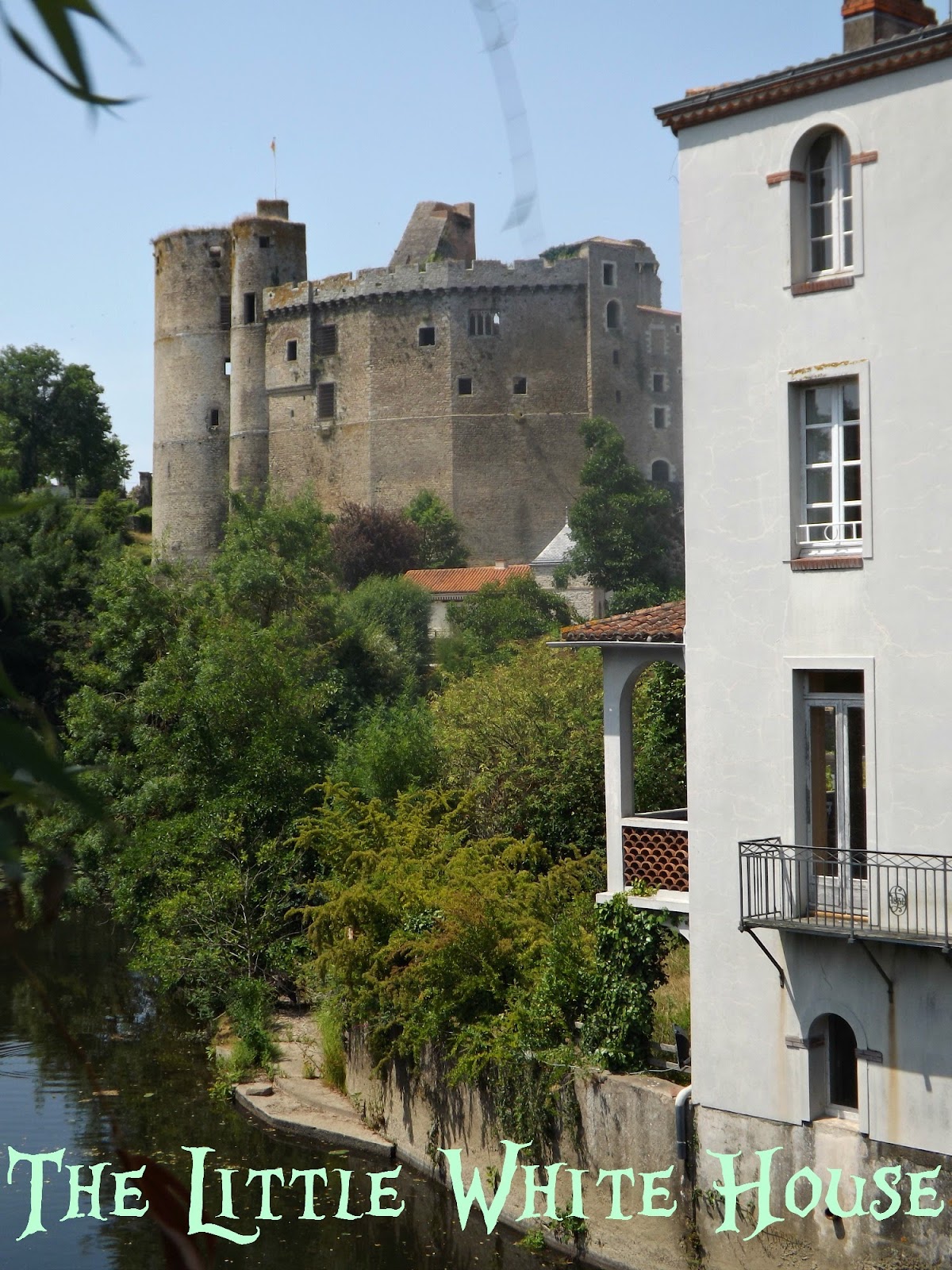
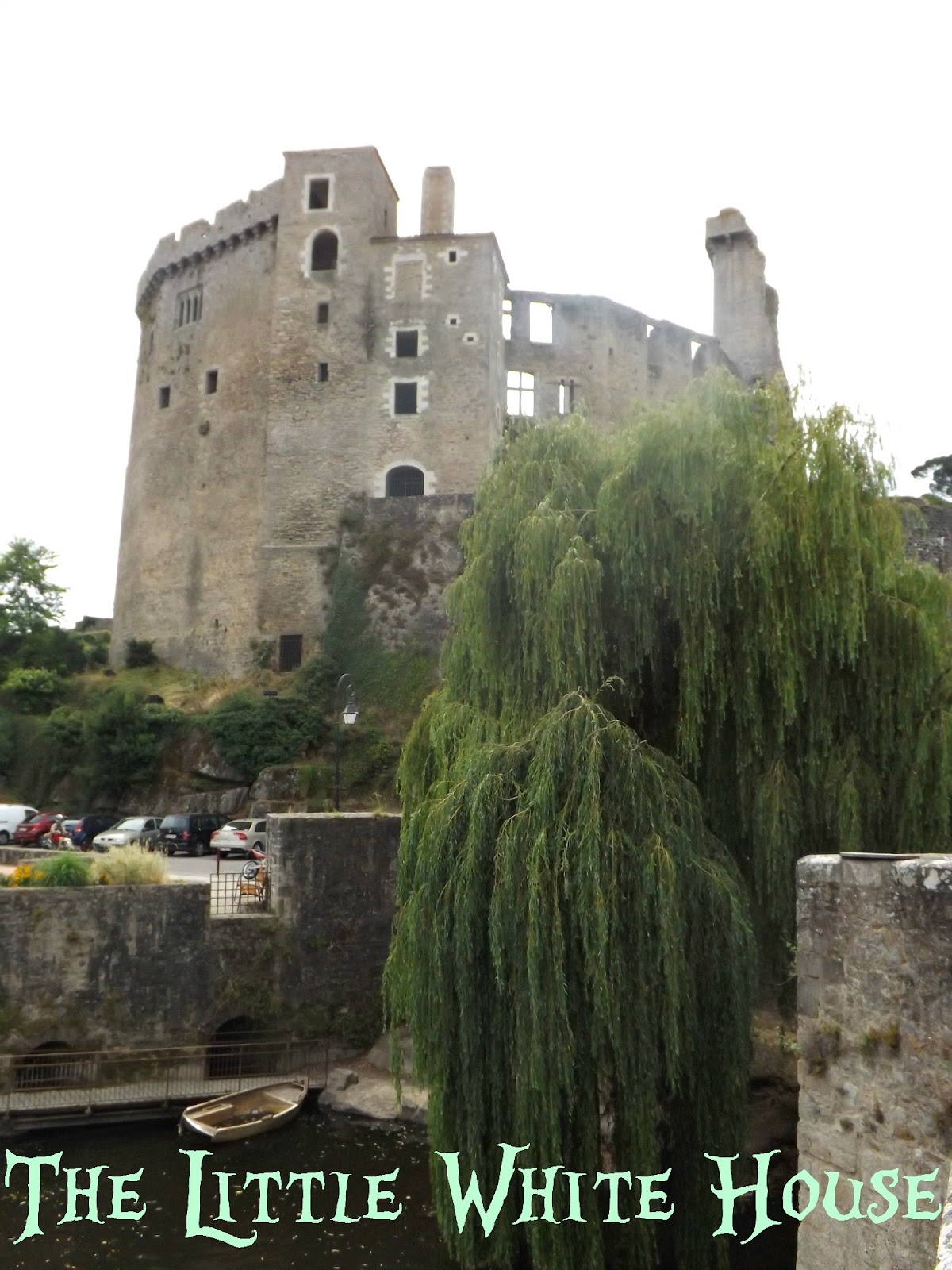
If you've read the first part of this post, you've visited a Medieval castle that was overlooking a little town with red tile roofs and square-shaped buildings. I had asked you where you thought it was... And you were a bit lost, as I knew you would be... Some of them guessed it was not far from Cottage, but were confused because the architecture looks nothing like Brittany.


Si vous avez lu la première partie de cet article, vous avez visité avec moi un château médiéval surplombant une ville toute de bâtiments aux formes carrées et aux toits de tuiles rouges. Je vous avais caché le nom de cette ville et vous avez eu l'air bien perdu... Cela ne ressemblait certes pas à la Bretagne. Etais-je en Italie ? Si loin de Cottage ?


Brittany is known for its long shaped stone buildings and its blue slate roofs. So, what happened here?

La Bretagne est en effet plutôt connue pour ses bâtiments en pierre, à la forme allongée (les fameuses "longères") et aux toits d'ardoises bleues. 


The village's name is Clisson and it's located just a little South of Nantes, the town that used to be capital of Brittany, but now weirdly isn't officially in Brittany anymore. On the map below, you have in blue the area of the historical Brittany. The part in dark blue is nowadays Brittany.


Il s'agit du village de Clisson, situé à quelques kilomètres au sud de Nantes, cette ville qui a été autrefois capitale de la Bretagne historique, même si aujourd'hui elle n'appartient plus à la Bretagne administrative.


It used to be a traditionnal Breton village with small stone houses, a very  Breton church and an old Medieval castle you can visit here. It was built along a river called Sèvre nantaise, which was a blessing for me as it was very hot the day I visited and the river brought some much needed cool air.


Clisson a d'abord été un village breton tout ce qu'il y a de plus normal avec ses petites maisons en pierre, son église probablement bien typique et son vieux château médiéval que vous avez visité ici. Le village avait été construit le long de la rivière nommée la Sèvre nantaise, ce que j'ai beaucoup apprécié car il faisait très chaud le jour de ma visite et la rivière amenait un peu de fraicheur. 

The castle belonged to the lords of Clisson for a very long time, each generation passing it to the next, until Olivier de Clisson was convinced of treason and all his properties were taken from him. You can read more about his family in this post.


 Le château a appartenu pendant des générations aux seigneurs de Clisson, jusqu'à ce qu'Olivier de Clisson soit condamné pour trahison et que tous ses biens soient saisis. Vous pouvez en lire plus sur ce que devint sa famille ici.


During the first French Revolution, the inhabitants of Clisson don't want to join the Republican army.  Clisson is going to be at the heart of the war between Republicans and Royalists, called the "Vendéens". In 1793, the castle and a part of the town are set to fire. In 1794, the whole town is destroyed.

Pendant la Révolution, de nombreux habitants de Clisson refusèrent de rejoindre l'armée républicaine. Clisson se trouve ainsi au cœur de la guerre entre Républicains et Vendéens. En 1793, le château et une partie du village sont incendiés. L'année suivante, le reste de la ville est détruite.

The town stayed empty as a ghost town for two years: inhabitants had either be slayed or  had fled away.

Clisson devint pendant deux ans une ville fantôme, abandonnée de ses habitants qui avaient été massacrés ou avaient fui. 


During the 19th century, three friends who had studied architecture in Italy, fell in love with the valley of Clisson. The two brothers Cacaults began to rebuild the town with a strong Tuscan inspiration.


Au XIXe siècle, trois amis, ayant étudié l'architecture en Italie, tombèrent amoureux de la vallée de Clisson. Les deux frères Cacault commencèrent à reconstruire la ville avec une forte influence italienne.


Their friend François-Frédéric Lémot bought the ruins of the castle. He also created a park and built a mansion in the Italian style that I might take you to next month... if you're good...


Leur ami François-Frédéric Lémot acheta les ruines du château. Il créa aussi un parc où il construit une villa au style italianisant où je vous emmènerai peut-être le mois prochain... si vous êtes sage...

Clisson was really a town I didn't want to miss when I spent a week in Nantes last summer and it didn't disappoint: it was like a little trip to Italy, only half an hour from Nantes. I'd even love to go back. If you're in the area, do stop in Clisson, it's really worth it.


Clisson était sur ma liste des lieux à visiter absolument lorsque j'ai passé une semaine à Nantes l'été dernier et je n'ai pas été déçue.  C'était comme un mini voyage en Italie à quelques kilomètres de Nantes. J'y retournerai avec plaisir. Si vous êtes dans le coin, ne négligez pas un petit arrêt dans cette ville, cela vaut le coup.


See you next time,

A la prochaine fois,

Hasta la proxima,


PS: I'm sharing this post with: